QUORA: Is climate change an imagined problem promoted by censorship and the media without scientific evidence?

Answer by: James Matkin , LAWYER WRITER (2006-present) Yes, climate change by man is an imagined unproven problem. Sea levels are not rising, islands are not sinking, some glaciers expand as others melt, polar bears flourish, winters are colder with massive snowfall and the ski business is booming. Alarmist computer projections of catastrophic warming all fail. Where is the problem? Humans are a tropical species and most prosperous during warm interglatial period. We certainly do not need a colder climate. Download the PDF This browser does not support PDFs. Please download the PDF to view it..

Israeli Astrophysicist rejects UN IPCC – Finds ‘the sun completely overturns the way we should see global warming’

Climate Depot Nov. 9, 2017 Award-winning Astrophysicist Dr. Shaviv is in Germany with many other skeptical scientists during the UN climate summit. Shaviv is warning about the scientific fallacies presented by the UN IPCC panel about global warming climate change. His full presentation at the conference is on November 10th.  Dr. Nir Shaviv on Cambridge Debate: ‘I was quite shocked to see how the audience was so one sided (though far less than the ridiculous 97:3 ratio we hear about!) and unwilling to listen to scientific arguments.’ Dr. Shaviv’s Key scientific points: ‘Evidence for warming is not evidence for warming by humans.’ …

Bad Science & Climate Alarm Distracts Us From Real Problems

Principia Scientific Aug. 5, 2019 Written by Sanjeev Sabhlok As a rule of thumb, 80 percent of policy development should be about understanding the problem. Once a problem is understood, the solution generally presents itself.  But in the case of climate change, policymakers have bypassed this step and are insisting on “fixing” the “problem.” They forget that the IPCC’s own reports show that there is no problem. Even in its extreme scenario (highly speculative), the worst that could happen is that our much richer future generations will become two percent less rich. But the IPCC fails to emphasize that without …

Erasing America’s Hot Past

Tony Heller Published on Aug 4, 2019 This video is a must-watch for people wanting to understand what is going on with the climate crisis scam. It shows what they are doing, how they are doing it, and what we need to do to prevent a hostile takeover of the corenerstone of our civilization – affordable, reliable energy.

Global CO2 emissions from cement production

Robbie M. Andrew CICERO Center for International Climate Research, Oslo 0349, Norway Correspondence:Robbie M. Andrew (robbie.andrew@cicero.oslo.no) Published: 26 January 2018 Abstract.The global production of cement has grown very rapidly in recent years, and after fossil fuels andland-use change, it is the third-largest source of anthropogenic emissions of carbon dioxide. The required data for estimating emissions from global cement production are poor, and it has been recognised that some global estimates are significantly inflated. Here we assemble a large variety of available datasets and prioritise official data and emission factors, including estimates submitted to the UNFCCC plus new estimates for China …

CO2 Data Manipulation

Principia Scientific July 30, 2019 Written by Dr Tim Ball (Climatologist) The consistent pattern of the IPCC reveals demonization and misrepresentations of CO2. Here are some basic facts about CO2 that illustrate the discrepancy between what the IPCC claim and what science knows. Natural levels of Carbon dioxide (CO2) are less than 0.04% of the total atmosphere; it is far from being the most important or even only greenhouse gas as most of the public understands. Water vapour which is 95 percent of the greenhouse gases by volume is by far the most abundant and important greenhouse gas. The other …

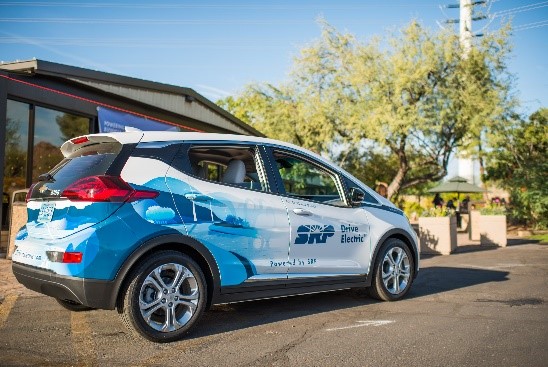
Electric Vehicles in Germany Emit More Carbon Dioxide Than Diesel Vehicles

Electric Vehicles in Germany Emit More Carbon Dioxide Than Diesel Vehicles

Institute for Energy Research June 10, 2019 A study by the IFO think tank in Munich found that electric vehicles in Germany emit 11 percent to 28 percent more carbon dioxide than their diesel counterparts. The study considered the production of batteries as well as the German electricity mix in making this determination. Germany spent thousands of euros on electric car subsidies per vehicle to put a million electric vehicles on the road, but those subsidies have done nothing to reach the country’s greenhouse gas emission targets. This is just the latest example of government programs expecting one outcome and …